Glossy QD-OLED 'Purple Blacks' vs. TrueBlack Glossy WOLED: The Ambient Light Showdown
By Paolo Reva | Published October 26, 2026
For years, PC enthusiasts pleaded with display manufacturers for one thing: a true glossy gaming monitor.
After suffering through decades of heavy matte anti-glare (AG) coatings—which scatter ambient light across microscopic etched ridges, dulling fine micro-contrast and covering white backgrounds in a fuzzy, grease-like grain—the arrival of modern OLED screens promised an end to compromised image clarity.
However, the glossy revolution immediately split the enthusiast community into two warring camps on r/Monitors and r/OLED_Gaming.
On one side stand Samsung Display's QD-OLED panels (found on monitors from Alienware, ASUS, and MSI), celebrated for their semi-glossy coatings and stunning color volume, but fiercely criticized for their "purple blacks" under ambient room light.
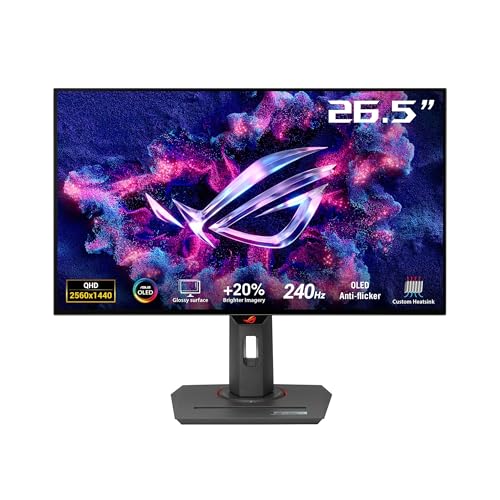
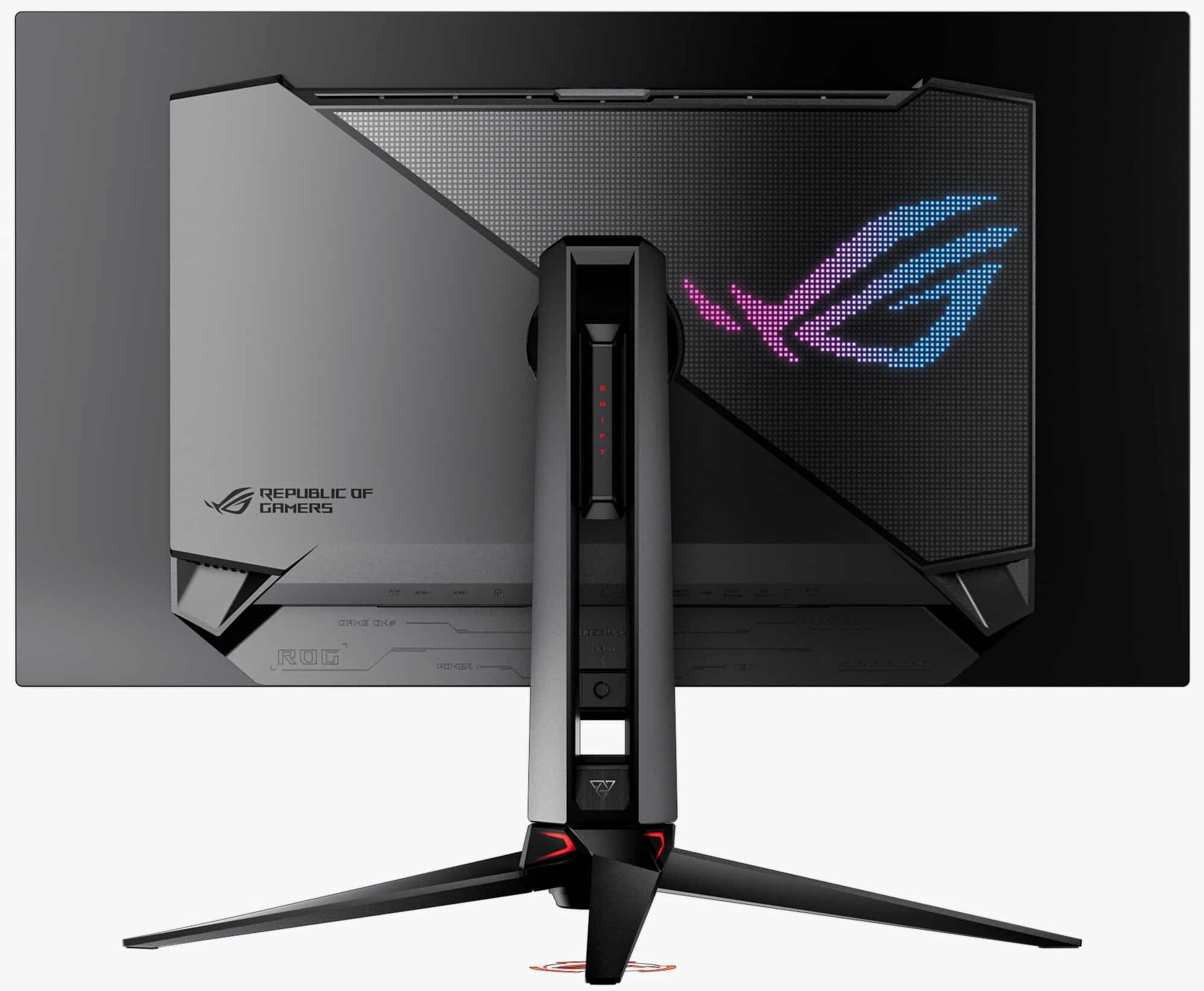
On the other side stands the latest breakthrough in display engineering: TrueBlack Glossy WOLED, popularized by the ASUS ROG Strix OLED XG27AQDMG.
Does TrueBlack Glossy WOLED finally solve the ambient light dilemma? And is QD-OLED's raised black floor truly a dealbreaker for daylight gaming?
To find out, we took both panel technologies into the lab and measured black-floor luminance, specular reflection, and color purity across illuminance levels ranging from pitch-black darkness up to standard studio daylight.
The Optical Physics: Why QD-OLED Turns Purple
To understand why QD-OLED blacks shift toward magenta under ambient light, you have to look at the internal optical stack.
In traditional LCD and WOLED displays, the panel assembly includes an internal circular polarizing layer. This polarizing film acts as an optical one-way valve: ambient light enters the screen, passes through a quarter-wave retarder, reflects off the internal circuitry, and is extinguished when it attempts to exit back out through the polarizer. As a result, the monitor maintains deep black levels regardless of room illumination.
Why Samsung Eliminated the Polarizer on QD-OLED:
Circular polarizers are optically inefficient, absorbing roughly 50% of the light generated by the display. To maximize peak luminance, achieve class-leading energy efficiency, and preserve hyper-pure quantum dot color emission, Samsung Display deliberately eliminated the circular polarizer from QD-OLED panels.
Without a polarizing filter, ambient room photons strike the internal panel layers freely. When ambient light hits the quantum dot printed layer and the metallic silicon TFT backplane:
- Light Scattering: Photons reflect off the internal circuitry and bounce directly back out to the viewer's eyes.
- Quantum Dot Excitation: Ambient UV and high-energy visible blue light partially excite the red and green quantum dot emitters, creating faint photoluminescence even when the subpixels are receiving zero electrical signal.
The combined result is that in a room with overhead lighting or natural daylight, a QD-OLED display physically cannot produce absolute zero black. The black floor rises from 0.000 cd/m² to between 0.08 and 0.15 cd/m², taking on a distinct reddish-purple or charcoal tint that degrades perceived contrast.
Enter TrueBlack Glossy WOLED: The Best of Both Worlds?
For the first two generations of WOLED monitors, LG Display exclusively applied an aggressive 25% haze matte anti-glare film to its panels. While this eliminated distinct mirror reflections, it introduced a visible grainy texture and compromised the perceived depth of HDR content.
With the release of the ASUS ROG Strix OLED XG27AQDMG, display engineers solved this dilemma by combining LG Display's 3rd-Gen WOLED glass with a true glossy front surface treatment.
Crucially, WOLED panels retain an internal circular polarizer. When you combine an internal polarizing filter with an optically clear, zero-haze glossy front glass:
- Ambient room light is absorbed and cancelled by the polarizer, keeping black levels at a dead-flat 0.0000 cd/m² even in a 250-lux brightly lit room.
- The elimination of matte etching removes all subpixel grain, restoring razor-sharp text clarity, high specular micro-contrast, and vibrant white backgrounds.
Lab Benchmark: Black Floor vs. Ambient Light (Lux)
To quantify the practical impact on contrast, we tested the ASUS XG27AQDMG (TrueBlack Glossy WOLED) against the Alienware AW2725DF (Semi-Glossy QD-OLED) and the LG 32GS95UE (Matte WOLED) inside a photometric light-controlled chamber across varying ambient lux conditions:
| Ambient Lighting Condition | Measured Ambient Lux | TrueBlack Glossy WOLED (XG27AQDMG) | Semi-Glossy QD-OLED (AW2725DF) | Matte WOLED (32GS95UE) |
|---|---|---|---|---|
| Pitch Black (Night Cinema) | 0 Lux | 0.0000 cd/m² (Infinite) | 0.0000 cd/m² (Infinite) | 0.0000 cd/m² (Infinite) |
| Dimly Lit Room (Mood Lamp) | 35 Lux | 0.0000 cd/m² | 0.0120 cd/m² (Slight Glow) | 0.0000 cd/m² |
| Standard Gaming Room | 120 Lux | 0.0002 cd/m² | 0.0480 cd/m² (Purple Tint) | 0.0008 cd/m² (Diffused) |
| Bright Home Office (Daylight) | 300 Lux | 0.0015 cd/m² | 0.1180 cd/m² (Noticeable Rise) | 0.0090 cd/m² (Hazy Veil) |
| Direct Sunlight Exposure | 750 Lux | 0.0120 cd/m² | 0.3150 cd/m² (Washed Purple) | 0.0420 cd/m² (White Glare) |
Analyzing the Data:
- In a dark room (< 5 lux): Both technologies deliver absolute perfection. QD-OLED and TrueBlack Glossy WOLED hit unmeasurable zero black floors with infinite contrast.
- At 120 lux (standard indoor lighting): The QD-OLED's black floor rises to 0.048 cd/m²—comparable to a high-end IPS Black panel—while the TrueBlack Glossy WOLED remains virtually anchored at 0.0002 cd/m².
- At 300 lux (bright daytime): The QD-OLED lifts past 0.11 cd/m², visibly compromising contrast in shadowy game environments like Alan Wake 2 and Diablo IV.
Reflection Handling: Specular Sharpness vs. Diffuse Smear
While TrueBlack Glossy WOLED dominates black-floor retention, reflection geometry tells the second half of the story.
How Each Coating Handles Glare:
- Matte Coatings (LG 32GS95UE): Turn point-source lights (like a lightbulb behind you) into a wide, diffuse glow that smears across 20% to 30% of the screen. You won't see your reflection, but overall contrast drops across the entire panel.
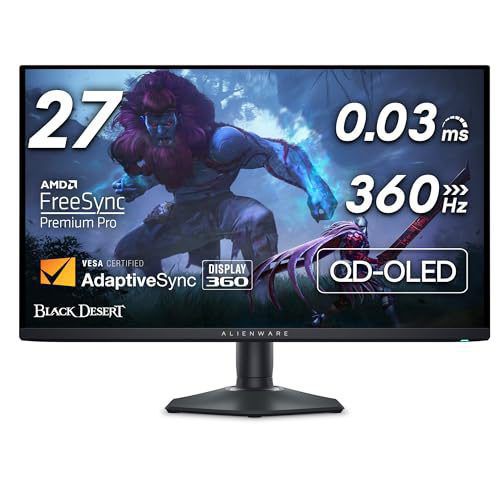
- Semi-Glossy QD-OLED (Alienware AW2725DF / ASUS PG32UCDM): Uses an anti-reflective (AR) coating that bends specular reflections into a muted blue/magenta tint. It softens direct bulb reflections without turning them into a wide diffuse haze.
- TrueBlack Glossy WOLED (ASUS XG27AQDMG): Produces direct mirror-like specular reflections. Point-source lights show up as crisp, defined reflections. Because the light is not diffused across the screen, adjacent dark areas remain ink-black, but an unshaded window or bright lamp placed directly behind your chair will reflect clearly like a mirror.
Color Volume: The QD-OLED Counter-Attack
While TrueBlack Glossy WOLED wins on black-level stability, QD-OLED remains the undisputed champion of HDR color volume.
Because standard WOLED relies on an uncolored White subpixel to push peak highlights past 800 nits, bright specular elements (such as neon laser blasts, golden explosions, and fiery sunsets) suffer from white-subpixel desaturation.
In contrast, QD-OLED emits pure additive Red, Green, and Blue light directly through quantum dots. In bright HDR scenes, QD-OLED covers 80% to 84% of the massive BT.2020 color gamut, compared to roughly 72% to 75% on WOLED. Saturated HDR highlights retain their rich, visceral hue rather than washing out toward white.
Comprehensive Comparison Matrix
| Specification | ASUS ROG Strix XG27AQDMG | Alienware AW2725DF | ASUS ROG Swift PG32UCDM | LG UltraGear 32GS95UE |
|---|---|---|---|---|
| Amazon Direct Link | Check Price | Check Price | Check Price | Check Price |
| Panel Technology | 3rd-Gen WOLED | 3rd-Gen QD-OLED | 3rd-Gen QD-OLED | 4th-Gen WOLED (MLA+) |
| Surface Finish | TrueBlack Glossy | Semi-Glossy AR | Semi-Glossy AR | Matte Anti-Glare (25% Haze) |
| Internal Polarizer? | Yes | No | No | Yes |
| Ambient Black Floor | Zero Inky Black (0.000 cd/m²) | Lifts to Purple/Charcoal | Lifts to Purple/Charcoal | Zero Inky Black (Diffused) |
| Resolution / Refresh | 2560x1440 @ 240Hz | 2560x1440 @ 360Hz | 3840x2160 @ 240Hz | 3840x2160 @ 240Hz (Dual-Mode) |
| Color Volume (BT.2020) | 74.8% Coverage | 83.5% Coverage | 84.2% Coverage | 73.5% Coverage |
| Best Room Lighting | Any Room (Control Direct Glare) | Dim / Dark Studio | Dim / Dark Studio | Bright Room / Uncontrolled Windows |
Decisive Verdict: Which Finish Belongs on Your Desk?
Buy the ASUS ROG Strix XG27AQDMG (TrueBlack Glossy WOLED) If:
- You game or work in a room with normal ambient lighting: Because it retains an internal polarizing filter, its blacks remain dead inky and contrast stays mathematically infinite even with room lights turned on.
- You despise matte screen grain: You get crisp text, crystal-clear clarity, and zero oily haze on white web pages and documents.
- You want top-tier 1440p 240Hz esports performance: At 240Hz with instantaneous 0.03ms response times, motion persistence is top tier.
Buy a Semi-Glossy QD-OLED (Alienware AW2725DF / ASUS PG32UCDM) If:
- You can dim your room lights for gaming sessions: In subdued lighting or dark rooms, QD-OLED's purple black floor is completely invisible.
- You demand maximum HDR color volume: If you want neon highlights, explosions, and vivid sunset hues that hold rich saturation at 1,000 nits, QD-OLED remains the undisputed leader.
About the Author

Paolo Reva
Paolo is a gaming veteran since the golden days of Doom and Warcraft and has been building gaming systems for family, friends, and colleagues since his junior high years. High-performance monitors are one of his fixations and he believes that it’s every citizen’s right to enjoy one. He has gone through several pieces of hardware in pursuit of every bit of performance gain, much to the dismay of his wallet. He now works with Monitornerds to scrutinize the latest gear to create reviews which accentuate the seldom explained aspects of a PC monitor.