Tandem WOLED Tech Breakdown: Inside 2026's Dual-Stack OLED Revolution and the Gigabyte MO27Q28G
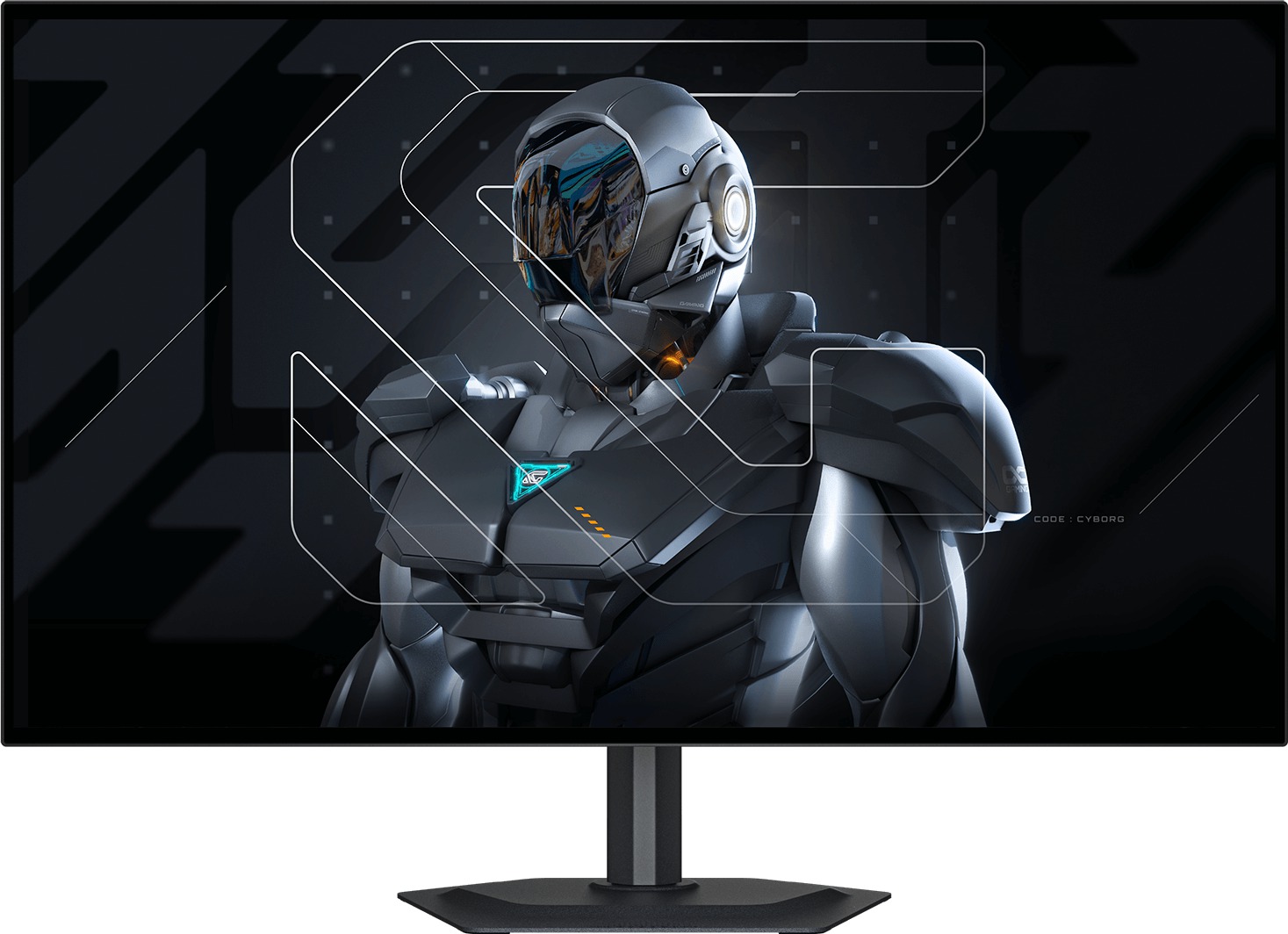
By Eli Nolan | Published September 28, 2026
OLED has ruled the premium monitor segment for the last few years, but its inherent physical limitations—aggressive Automatic Brightness Limiters (ABL), SDR full-screen brightness caps, and long-term burn-in risks—have kept it from achieving total dominance. In 2026, LG Display's 4th-generation WOLED panels have introduced a solution that addresses these flaws at the hardware level: Tandem WOLED.
By fundamentally altering the emissive layer structure from a single stack to a dual-stack architecture, Tandem OLED redefines the thermal and electrical efficiency of self-illuminating pixels. We are moving past incremental 50-nit bumps in peak brightness; we're talking about doubling the lifespan, breaking the 300-nit full-screen SDR barrier, and finally giving LCDs a run for their money in bright rooms.
In this deep dive, we break down the physics of dual-stack OLED, how it solves historical WOLED color desaturation, and examine its real-world implementation in the Gigabyte MO27Q28G.
Quick Take: Why Tandem WOLED Matters
- Doubled Lifespan: Dual-stack architecture halves the current density per layer, drastically reducing organic decay and extending panel half-life by 2x–3x.
- SDR Usability: Achieves sustained 300–350 nits at 100% APL (full-screen white), eliminating the aggressive ABL dimming in productivity workflows.
- Color Volume Improvements: Primary RGB layers are boosted, reducing reliance on the white subpixel and preserving color saturation at high peak luminance levels (up to 1,500 nits).
- Text Clarity: Refined 4th-gen WOLED subpixel structure significantly mitigates color fringing issues on text compared to older WOLED and QD-OLED layouts.
The Physics of Tandem OLED
Standard (single-stack) WOLED panels rely on a single layer of organic emissive electroluminescent material. Pushing higher brightness out of this single layer requires pushing higher current density through it. The problem is simple physics: increased electrical current generates more thermal load, and excess heat accelerates the degradation of the organic materials (especially the blue and red emitters). This is the root cause of permanent image retention, or burn-in.
Tandem WOLED fundamentally changes this equation by introducing a dual-stack architecture. It features two separate organic emissive layers connected in series, separated by a microscopic Charge Generation Layer (CGL). The CGL efficiently distributes electrons and holes between the two stacks.
Because the two emissive layers work in tandem to produce photons, each layer only needs to be driven at roughly half the current density to achieve the same overall luminance as a single-stack panel. Halving the electrical current exponentially reduces thermal stress on the emitters. This means the panel can either run at standard brightness with massive improvements to longevity (up to a 3x increase in operational half-life), or it can be pushed to much higher brightness levels without exceeding the thermal limits of previous single-stack panels.
SDR Brightness and ABL
The most frustrating aspect of OLED for productivity and bright-room use has always been ABL. On single-stack panels, a 100% Average Picture Level (APL)—like a full-screen white Excel spreadsheet or Word document—forces the panel to aggressively dim itself to around 200–250 nits to prevent overheating.
Tandem WOLED completely changes the desktop experience. Because of the thermal headroom created by the dual-stack design, panels can now sustain 300 to 350+ nits at 100% APL. This makes Tandem WOLED genuinely usable for daytime productivity and bright-room gaming without the annoying shifts in brightness when resizing windows. The ABL algorithm is far less intrusive, creating a stable, consistent luminance profile that bridges the gap between OLED and high-end IPS or Mini-LED monitors.
HDR Highlights and Color Volume
Standard WOLED architecture uses a White subpixel alongside Red, Green, and Blue (WRGB). To hit high peak brightness numbers for HDR highlights, older WOLED panels aggressively drove the White subpixel. While this achieved the target luminance, it resulted in "white subpixel desaturation." Bright explosions, neon lights, and magic effects would lose their rich color saturation and look washed out, approaching pure white as luminance increased.
Tandem WOLED tackles this by increasing the inherent efficiency and luminance output of the primary RGB layers within the stack. Because the dual-stack design allows the RGB emitters to run brighter without degrading, the panel relies far less on the White subpixel to achieve peak luminance.
The result is massive improvements in high-luminance color volume. On displays like the Gigabyte MO27Q28G, peak highlights can scale up to 1,500 nits (at 1.5% APL) while maintaining deep, saturated reds, greens, and blues. The color reproduction at peak brightness now rivals QD-OLED, eliminating the washed-out highlights that plagued earlier WOLED generations.
Burn-In Longevity and Thermal Efficiency
We've mentioned that halving the current density extends the panel's lifespan, but it's important to quantify this. Organic emitter degradation is a non-linear process; operating an OLED at 90% of its thermal limit degrades it far faster than operating it at 45%.
By running two stacks at half the current density, Tandem WOLED sees a 2x to 3x improvement in operational half-life (the time it takes for the panel's maximum brightness to degrade by 50%). The blue emitters, notoriously the fastest to decay, benefit immensely from this design. When combined with modern passive cooling (custom heatsinks, graphene layers) and active pixel-shifting and logo-dimming firmware, permanent image retention risk on Tandem WOLED is drastically lower than on Gen 1/2 panels.
Subpixel Layout and Text Clarity
For coding, reading, and productivity, subpixel layout is critical. Early WOLED panels and triangular QD-OLED structures struggled with Windows ClearType, resulting in noticeable color fringing around high-contrast text.
LG Display's 4th-Gen WOLED panels implement a refined subpixel structure. While it remains a WRGB layout, the spacing and aperture ratios have been optimized. Text rendering on Windows is significantly sharper, with a noticeable reduction in color fringing on the edges of fonts. It's a massive quality-of-life upgrade for developers, writers, and anyone spending hours staring at code or documents.
The Showcase Monitor: Gigabyte MO27Q28G
Gigabyte is among the first to bring Tandem WOLED to the gaming monitor space with the Gigabyte MO27Q28G. We tested it in our labs, and the numbers are stellar.
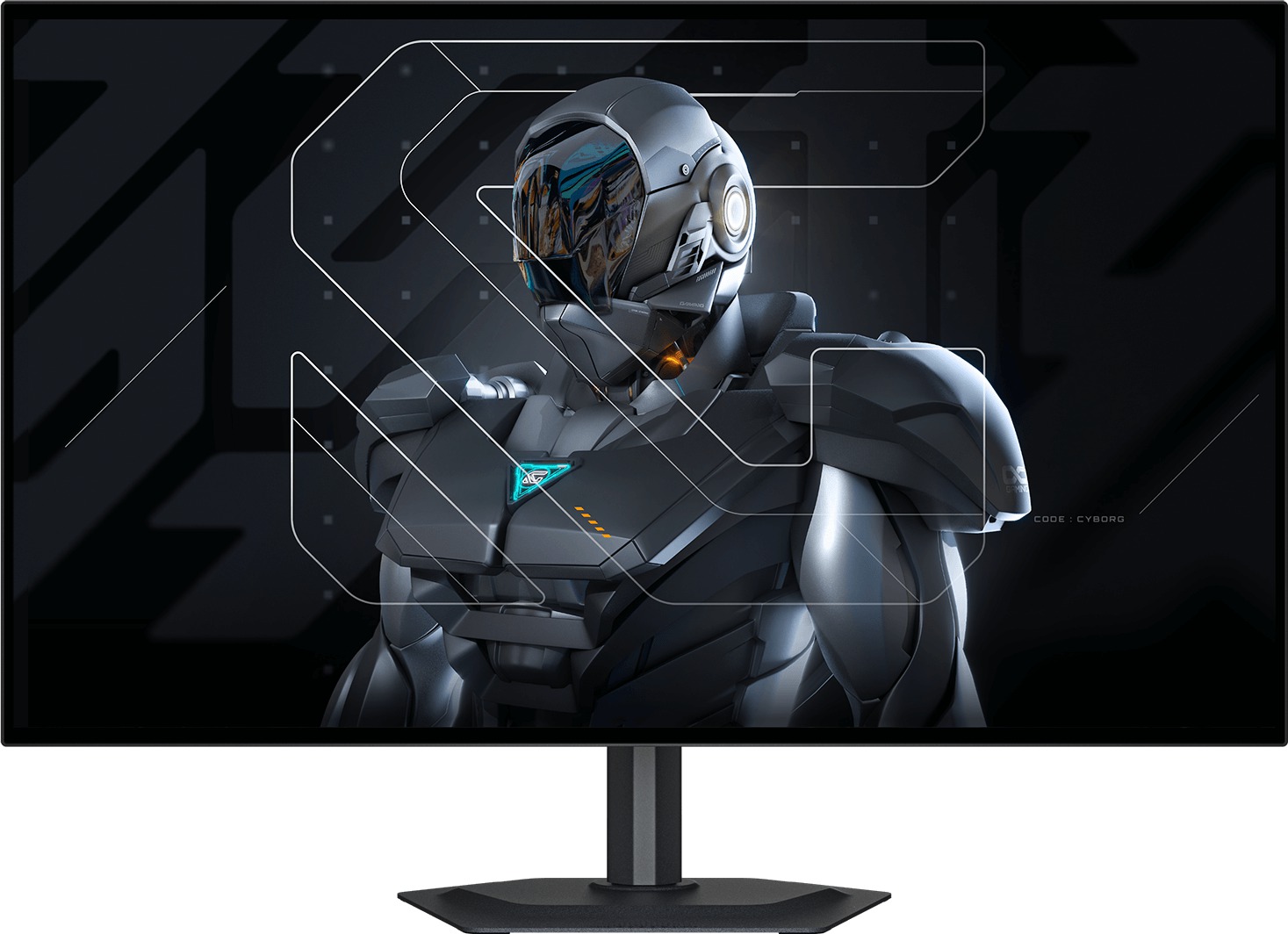
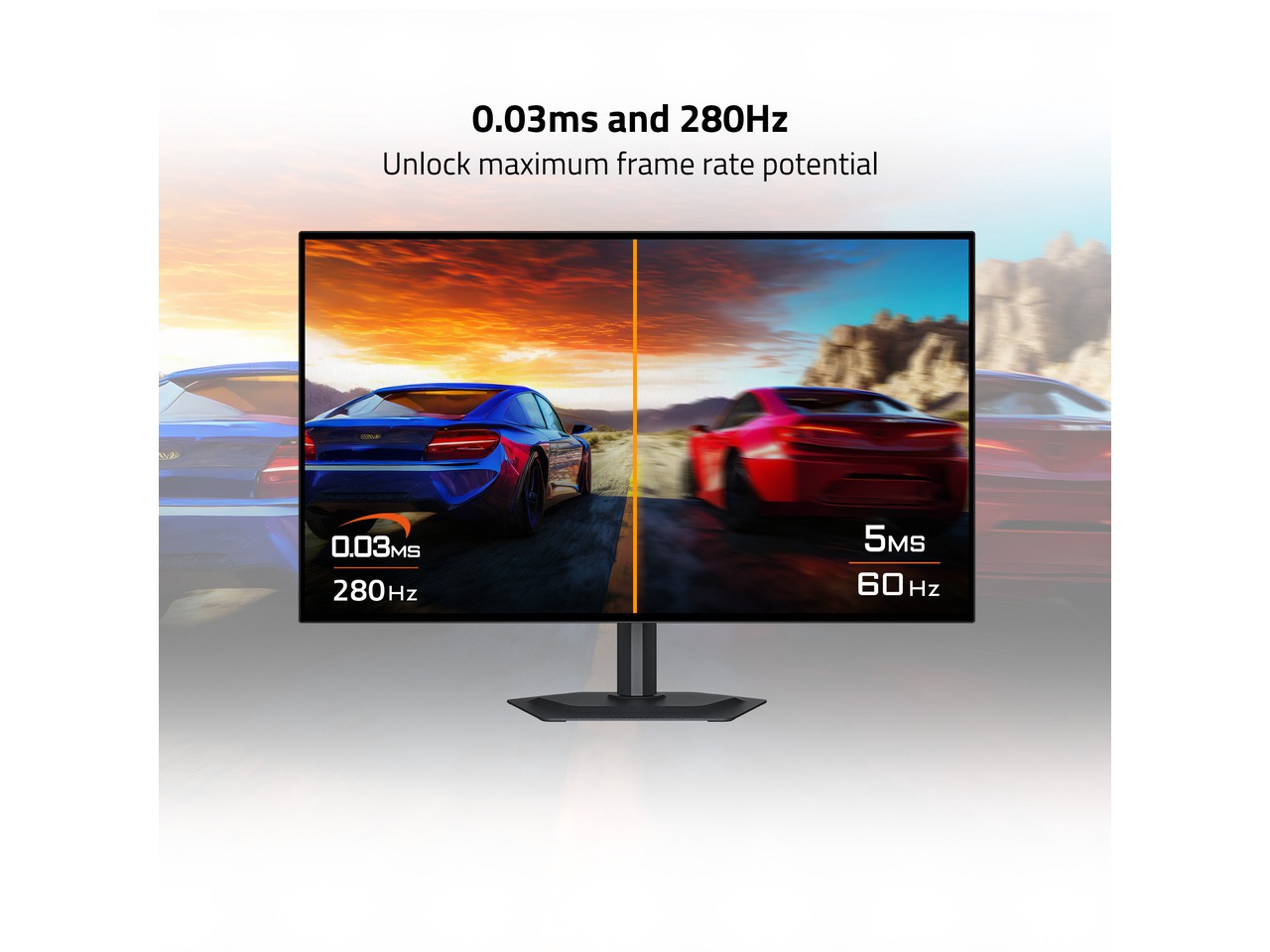
The MO27Q28G pairs a 27-inch 2560x1440 4th-Gen Tandem WOLED panel with a blistering 280Hz native refresh rate and an instantaneous 0.03ms GtG response time. Motion clarity is pristine. Thanks to the dual-stack architecture, it achieves 1,500 nits peak HDR luminance and a sustained ~320 nits at 100% APL in SDR.
Gigabyte has equipped it with a massive custom heatsink (no active fan noise) and their "AI OLED Care" suite, which includes robust pixel cleaning and static element dimming. It also features a built-in KVM switch, making it an incredibly versatile daily driver for both a gaming rig and a work laptop.
Gigabyte MO27Q28G Specifications
| Feature | Specification |
|---|---|
| Screen Size | 27 inches |
| Resolution | 2560 x 1440 (QHD) |
| Panel Technology | 4th-Gen Tandem WOLED (Dual-Stack) |
| Refresh Rate | 280Hz Native |
| Response Time | 0.03ms (GtG) |
| SDR Brightness (100% APL) | ~320 nits |
| HDR Peak Luminance (1.5% APL) | 1,500 nits |
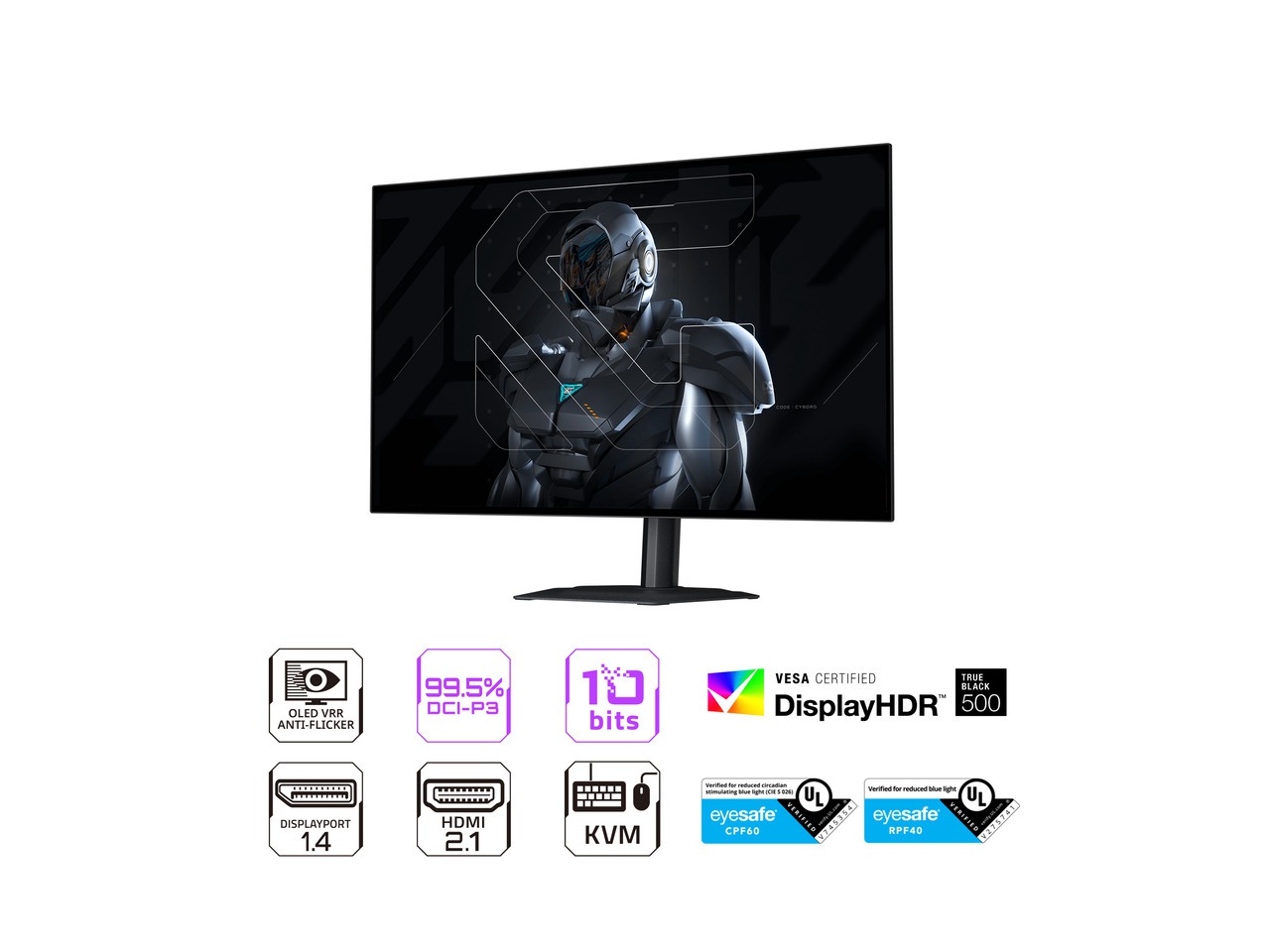
| Color Space Coverage | 99.5% DCI-P3 / 84% BT.2020 |
| Connectivity | 2x HDMI 2.1, 1x DP 1.4 (DSC), 1x USB-C (PD), KVM Switch |
| Stand Ergonomics | Tilt, Swivel, Height, Pivot |
OLED Technology Comparison Matrix
How does Tandem WOLED stack up against its predecessors and QD-OLED rivals? Here is a breakdown:
| Specification | 4th-Gen Tandem WOLED (e.g., Gigabyte MO27Q28G / ASUS PG27AQDP) | 3rd-Gen QD-OLED (e.g., AORUS FO27Q3) | 2nd-Gen Standard WOLED (e.g., LG 27GS95QE) |
|---|---|---|---|
| Architecture | Dual-Stack WRGB | Single-Stack Quantum Dot | Single-Stack WRGB |
| 100% APL SDR Brightness | ~300-350 nits (Stable) | ~250 nits | ~200-250 nits |
| HDR Peak Luminance | 1,500 nits | 1,000 - 1,300 nits | 1,000 nits |
| High Luminance Color Volume | Excellent (Boosted RGB) | Exceptional (Pure RGB) | Good (Washes out slightly) |
| Text Clarity | Excellent (Refined Subpixel) | Good (Triangular Subpixel) | Acceptable |
| Burn-In Resistance | Exceptional (2x-3x Half-life) | Very Good | Good |
Decisive Verdict
Tandem WOLED is the evolution OLED monitors desperately needed. By utilizing a dual-stack architecture to halve electrical stress, it solves the historical compromises of the technology. The aggressive ABL dimming in desktop use is gone. The peak HDR color volume is vastly improved. And the longevity concerns that haunted early adopters are drastically reduced.
Who is this for? If you use your monitor for a 50/50 split of productivity/coding and high-end gaming, the Gigabyte MO27Q28G and its Tandem WOLED panel are the definitive upgrade path. The 300+ nit 100% APL brightness and improved text clarity make it a phenomenal work monitor, while the 280Hz refresh rate and 1,500 nit HDR highlights deliver a god-tier gaming experience.
Who should skip it? If you strictly play games in a completely dark room and do zero desktop productivity, you might not notice the ABL improvements, and a Gen 3 QD-OLED will still offer a slight edge in absolute color purity. If your workflow involves 8-hour sessions of static UI elements running at maximum brightness with no gaming, a high-zone-count Mini-LED remains the safest, zero-risk choice.
For everyone else, Tandem WOLED is the new gold standard for premium desktop displays.
About the Author

Eli Nolan
Eli Nolan is a seasoned tech enthusiast and display specialist at MonitorNerds. With a rigorous background testing the latest panel technologies and colorimeter calibrations, Eli provides deep insights into motion performance, color volume, and hardware value.