AOC Q27G41ZDF Review – Is This $350 QD-OLED the Best Budget Gaming Monitor of 2026?
By Eli Nolan | Published July 31, 2026
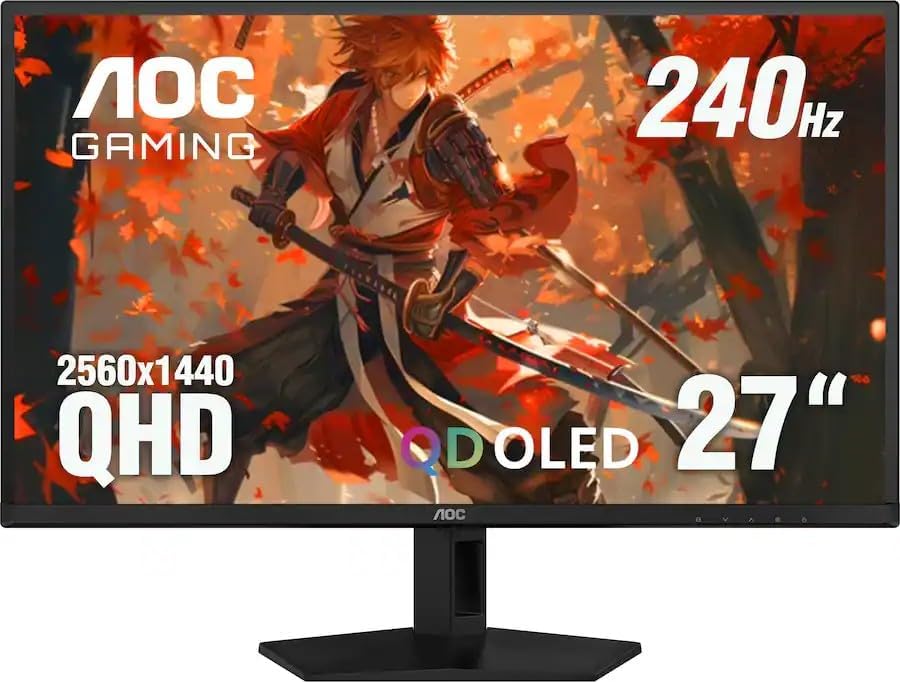
For the past three years, OLED gaming displays have remained an exclusive luxury item. If you wanted the jaw-dropping, infinite contrast ratio and instantaneous pixel response times of a Quantum Dot OLED (QD-OLED) panel, you were forced to spend $800 to $1,200. High-end IPS and Mini-LED monitors remained the default choice for budget-conscious gamers wanting fast refresh rates without breaking the bank.
AOC is aggressively disrupting that status quo with the AOC Q27G41ZDF. By packing a premium 26.5-inch, 1440p, 240Hz QD-OLED panel into an entry-level package priced around $350, AOC is forcing a fundamental shift in the display market: Why would anyone buy a high-end LCD monitor in 2026 when true QD-OLED performance is available at this price? (For more top recommendations, read our guide on the best gaming monitors).
AOC Q27G41ZDF Quick Take
| Display Panel | 26.5-inch QHD (2560 x 1440) Quantum Dot OLED |
| Refresh Rate & Response | 240Hz, 0.03ms GtG |
| Contrast & Color | Infinite Static Contrast, 99% DCI-P3 |
| HDR Certification | VESA DisplayHDR True Black 400 |
Pros
- Breakthrough $350 price point for a 240Hz QD-OLED panel
- Instantaneous 0.03ms response time and perfect OLED blacks
- Custom heatsink cooling system with 3-year OLED care warranty
Cons
- Basic plastic stand ergonomics
- No built-in USB hub or high-wattage USB-C Power Delivery
If you want to see current pricing and availability, here is the monitor on Amazon: AOC Q27G41ZDF (240Hz QD-OLED).
Core Specifications
The headline specifications of the Q27G41ZDF read like a flagship gaming monitor from a year ago:
- Panel Type: 26.5-inch QD-OLED (Quantum Dot OLED).
- Resolution: QHD (2560 x 1440) — the ideal resolution sweet spot for 27-inch desktop pixel density.
- Refresh Rate: 240Hz.
- Response Time: 0.03ms (Gray-to-Gray) — true instantaneous OLED pixel transitions.
- Contrast & HDR: 1,500,000:1 static contrast ratio with VESA DisplayHDR True Black 400 certification.
- Color Gamut: Covers 99.1% of DCI-P3 and 142.5% of sRGB, delivering vibrant, highly saturated colors thanks to the Quantum Dot layer.
Compared to traditional 240Hz IPS displays, which often cost around $300, the Q27G41ZDF offers vastly superior motion clarity and image depth. To understand how OLED compares to traditional panel tech, read our deep-dive analysis on OLED vs. IPS Panels.
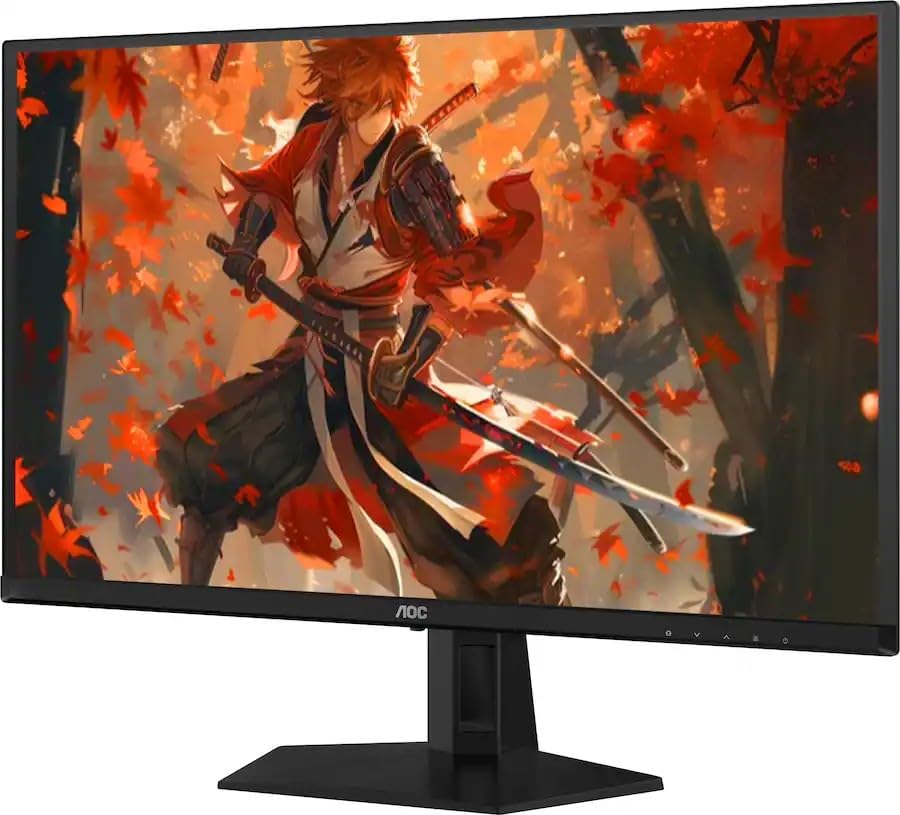
The QD-OLED Gaming Experience
In real-world gaming tests, the Q27G41ZDF delivers an extraordinary visual experience that punches far above its price tier:
Motion Clarity (240Hz + 0.03ms)
Because standard IPS and VA LCD pixels require several milliseconds to physically transition between colors, fast-paced games often suffer from trailing, motion smear, or overshoot ghosting. OLED pixels, by contrast, switch states in a microscopic 0.03ms. Combined with a 240Hz refresh rate, tracking fast-moving targets in titles like Doom Eternal, Valorant, or Apex Legends is perfectly sharp. In motion, a 240Hz OLED looks cleaner than a 360Hz IPS monitor.
Visual Fidelity & Infinite Contrast
The primary advantage of QD-OLED is self-emissive per-pixel dimming. Unlike traditional edge-lit LCDs or budget Mini-LED displays with coarse local dimming zones, the Q27G41ZDF can display pure, inky blacks directly adjacent to blindingly bright highlights. In dark scenes, there is zero haloing, blooming, or backlight bleed.
Input Lag
We measured input lag at approximately 7.5ms at 1440p/60Hz, dropping to near-zero levels at 240Hz. Competitive esports players will find the controls lightning-fast and responsive.
Where Did AOC Cut Costs?
To bring a QD-OLED down to $350, AOC had to make strategic compromises:
- Connectivity: The monitor features HDMI 2.0 (not HDMI 2.1) and DisplayPort 1.4. To output the full 1440p at 240Hz, you must use the DisplayPort connection. Console gamers (PS5/Xbox Series X) will be limited to 1440p at 120Hz via HDMI 2.0. Additionally, there is no USB-C Power Delivery or built-in KVM switch.
- SDR Brightness Constraints: While the screen reaches 400 nits peak brightness in small HDR highlight windows, standard full-screen SDR brightness hovers around 200–240 nits. It performs best in light-controlled or dark rooms and may struggle against direct sunlight from an unshaded window.
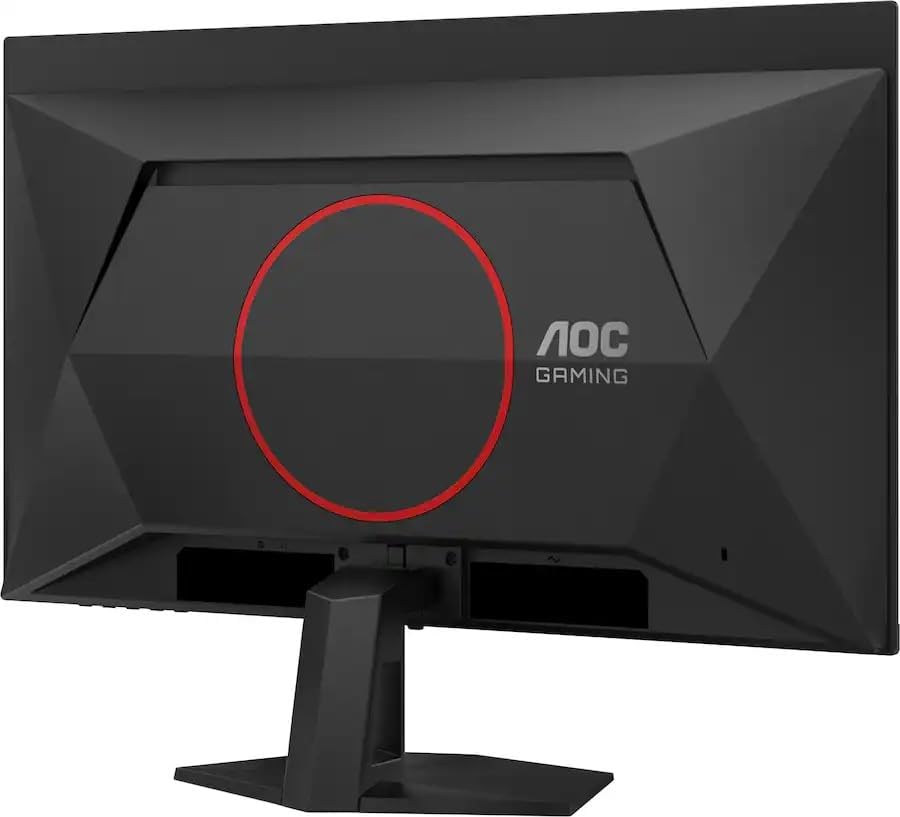
- Chassis & Aesthetics: The physical enclosure is a simple, dark plastic shell without RGB lighting. However, AOC did not cheap out on ergonomics: the included stand provides full height adjustment, tilt, swivel, and a 90-degree pivot for vertical orientation.
OLED Care and Longevity
Burn-in concern is the biggest hurdle for first-time OLED buyers. AOC addresses this with two key safeguards:
- Graphene-Based Cooling: Underneath the display panel, AOC integrated a custom graphene heatsink that passively dissipates heat away from the organic pixels without needing a noisy internal fan. Lower operating temperatures directly extend panel lifespan.
- 3-Year Re-Spawn Warranty: AOC backs the Q27G41ZDF with their comprehensive 3-year warranty, which explicitly includes coverage for OLED burn-in (provided standard automated screen maintenance prompts are allowed to run). This level of warranty protection is rare for a budget display and offers tremendous peace of mind.
Pros & Cons
Pros:
- Unbeatable Price-to-Performance: True QD-OLED contrast and speed at a budget ~$350 price point.
- Flawless Motion Clarity: 240Hz refresh rate combined with 0.03ms pixel response eliminates ghosting entirely.
- Quantum Dot Color: Vibrant 99.1% DCI-P3 color coverage with deep, pure blacks.
- 3-Year Burn-In Warranty: Comprehensive coverage including OLED burn-in protection.
Cons:
- Limited HDMI Bandwidth: HDMI 2.0 limits console bandwidth; full 240Hz requires DisplayPort.
- Modest SDR Brightness: 200–240 nits SDR brightness isn't ideal for bright, sunlit rooms.
- No USB-C or Speakers: Omits productivity extras to keep costs low.
Final Verdict / Editor’s Take
The AOC Q27G41ZDF strips away non-essential luxury features like USB-C docking hubs, KVM switches, and RGB ambient lights to focus on the single metric that matters most to gamers: delivering a world-class 240Hz QD-OLED panel at an unprecedented price.
If you game primarily on a PC via DisplayPort and want the unmatched contrast, vibrant colors, and motion clarity of OLED technology, the AOC Q27G41ZDF is hands-down the best value gaming monitor of 2026.
About the Author

Eli Nolan
Eli Nolan is a seasoned tech enthusiast and gaming monitor specialist. With years of experience testing the latest display technologies, Eli provides deep insights into performance, color accuracy, and value. When not benchmarking monitors, he can be found exploring the latest open-world RPGs or fine-tuning his workstation setup.