AOC G2460PF Review: The 144Hz Legend That Stood the Test of Time
By Paolo Reva | Published April 4, 2026
Please note that while the AOC G2460PF is legendary for its reliability, the chassis itself is no longer available for purchase new. We highly recommend checking out its modern spiritual successor, the AOC 24G4 23.8" Gaming Monitor. This model fixes all the issues of the old G2460PF by transitioning to a Fast IPS panel, giving you vastly superior color accuracy and viewing angles. It also aggressively bumps the speed up to a 180Hz refresh rate with a modern 1ms response time, making it an incredible budget choice.
The gaming monitor market is notorious for moving at breakneck speed. Brands regularly refresh their lineups with higher refresh rates, new panel technologies, and eye-watering price tags. In this constantly evolving industry, very few monitors manage to stay relevant for more than a couple of years. However, the AOC G2460PF has proven to be a remarkable exception.
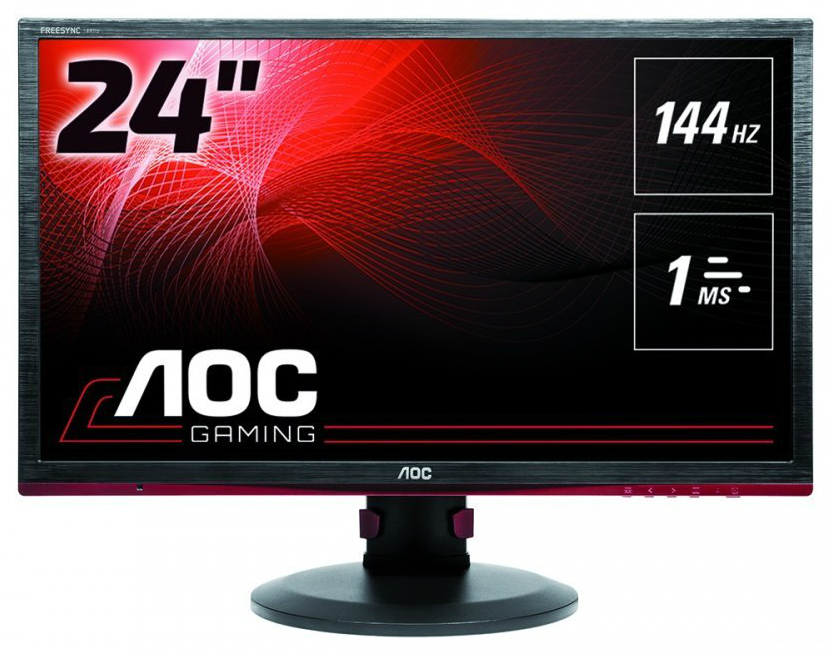
Originally launching as an affordable 144Hz display aimed at competitive esports players, the G2460PF broke barriers by bringing high-refresh-rate gaming and AMD FreeSync to the masses without breaking the bank. As we look at this display in 2026, it is clear why it originally earned its "Amazon's Choice" badge. While it doesn't boast the OLED blacks or 4K resolution of modern beasts, its legendary reliability and rock-solid performance have cemented it as one of the best value propositions in PC gaming history. Let's explore why this monitor has stood the test of time so gracefully.
Technical Specifications
- Screen Size: 24 inches
- Resolution: 1080p (1920 x 1080)
- Aspect Ratio: 16:9
- Panel Technology: Twisted Nematic Film (TN)
- Refresh Rate: 144Hz
- Response Time (G2G): 1 millisecond
- Contrast Ratio: 1000:1 (Typical)
- Brightness: 350 cd/m²
- Stand: Height adjustable (5.11 inches), Tilt (-5°/+22°), Swivel
- VESA Compatibility: Yes (100x100mm)
- Connectivity: DisplayPort, HDMI, DVI, D-Sub (VGA), 4x USB 2.0 Hub
Design: Simple, Functional, and Built to Last
Unlike modern gaming monitors that often rely heavily on aggressive RGB lighting and alien-inspired geometry, the AOC G2460PF features a reserved, utilitarian aesthetic. It sports a matte black finish with a subtle brushed-aluminum texture. The bezel is relatively standard for its era, with a distinct red accent strip running across the bottom chin indicating its gaming pedigree.
Where the physical design truly shines is its ergonomics and outstanding durability. Even after years of heavy daily use, the fully adjustable stand remains rigid and smooth to operate, avoiding the loosening or “wobble” that often plagues budget hardware over time. You can easily adjust the height, tilt, and swivel, and even use the standard 100x100mm VESA mount to throw it onto an aftermarket monitor arm.
The I/O is incredibly generous, featuring DisplayPort (required for full 1080p at 144Hz), HDMI, DVI, and even legacy D-Sub alongside a handy 4-port USB 2.0 hub. Over the years, countless community members have praised the G2460PF for its lack of hardware failures—it is a workhorse monitor that simply refuses to die, making it a very safe investment for budget builders or those looking for a deeply reliable secondary screen for stream chat and Discord.
Display Performance: Speed Over Frills
At its core, the AOC G2460PF uses a Twisted Nematic (TN) panel. In 2026, IPS and OLED panels represent the gold standard for color vibrancy and viewing angles, but TN panels still hold their ground where absolute speed is concerned.
With a blistering 144Hz refresh rate and a genuine 1ms response time, the G2460PF practically eliminates motion blur. Competitive players in fast-paced shooters like Counter-Strike 2 or Valorant will still find the target tracking on this panel to be exceptionally sharp and responsive. Paired with AMD FreeSync over DisplayPort, you get a buttery-smooth, tear-free picture in the 35Hz to 144Hz window.
Of course, the limitations of TN technology are present. The viewing angles wash out significantly if you aren't sitting directly in front of the display, and the color saturation lacks the pop and depth of a modern IPS screen. However, AOC compensates for this with raw brightness. Pushing an impressive 350 nits of peak brightness (compared to the standard 250-300 nits common in this budget tier), the monitor cuts through daytime glare beautifully, making it perfectly usable in well-lit student dorms or sunny home offices.
Reliability and The Test of Time
While evaluating a monitor's specifications is important, evaluating its lifecycle lifespan is where the AOC G2460PF becomes legendary. In an era where modern high-end panels sometimes struggle with pixel-burn in or firmware glitches, the AOC G2460PF is widely regarded by the global enthusiast community as a bulletproof tank.
Reports of dead pixels or backlight bleeding developing over time are extremely rare for this model. It has maintained an incredibly low RMA (Return Merchandise Authorization) and defect rate since its inception. Many users who purchased this screen at its original launch are still happily running it today without a single hardware flaw, a testament to AOC's quality control on this specific production line.
Conclusion
The AOC G2460PF might lack the visual flair of today's OLED displays or curved ultrawides, but it remains a masterclass in budget competitive gaming. Offering true 144Hz/1ms performance wrapped in a durable chassis with a fully ergonomic stand, it easily handles the demands of modern esports.
More importantly, its flawless track record for hardware reliability and low repair problems means that whether you are buying it brand new or keeping an old unit alive as a secondary panel, you can trust it to keep running strong for years. It is arguably one of the most reliable gaming monitors ever produced, and a glowing recommendation for gamers prioritizing speed and longevity on a strict budget.
About the Author

Paolo Reva
Paolo Reva brings a sharp eye for detail to the monitor world, specializing in competitive displays and high-refresh-rate advancements. When he's not busy dissecting pixel response times or diving deep into color calibration, you'll likely find him climbing the ranks in team-based tactical shooters or writing extensive guides for esports enthusiasts.